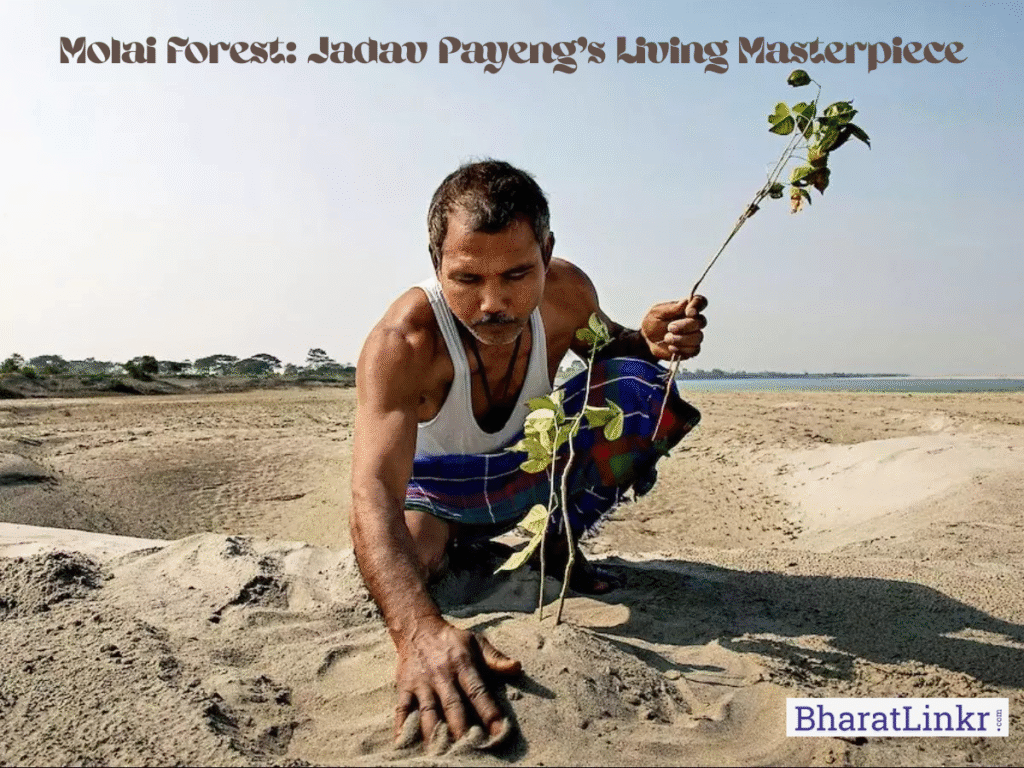
Jadav Payeng has created what may well be the largest man-made forest planted by a single individual on this planet. On the sandbars of the Brahmaputra, near his birthplace of Arunachapori, Kokilamukh in Jorhat, he began with saplings more than thirty years ago. When Jadav was sixteen years old, he witnessed the death of many snakes on a barren sandbar after a flood. The snakes had died because the land was bare and the sun was too hot. This encounter moved him deeply.
Without waiting for others to help, Jadav planted about twenty bamboo saplings on the empty land. This was the first move he took to revitalize a dying place. He sowed more seedlings and took care of them daily. His work is not finished. Having transformed one barren sandbar into a sanctuary, he has taken up the task of planting another.
Growing the Molai Forest
That first planting was the beginning. Jadav planted trees and nurtured the forest for almost thirty years. Over time, they became what we today call the Molai Forest. The forest stretches across 550 hectares, roughly 1,360 acres.
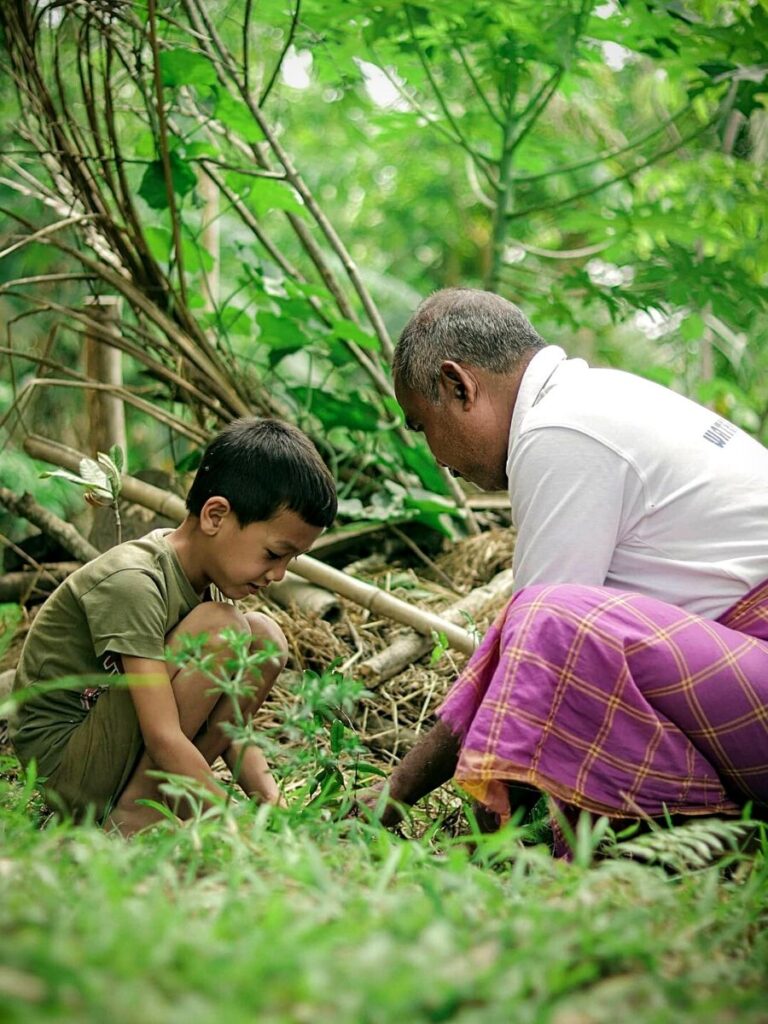
The Molai forest is full of life. It has bamboo trees that cover over 300 hectares, and thousands of trees like arjun, silk trees, cotton trees, and royal poinciana (Delonix regia). Animals such as elephants, tigers, Indian rhinoceroses, deer, rabbits, monkeys, and many birds also live there.
Every year, about 100 elephants come to the jungle and spend roughly six months there. In recent years, 10 elephant calves have been born in the Molai forest alone.
Awards and Recognition
Nobody knew about Jadav’s forest until 2008, when forest officials were searching for elephants and found this lush forest instead of an empty sandbar.

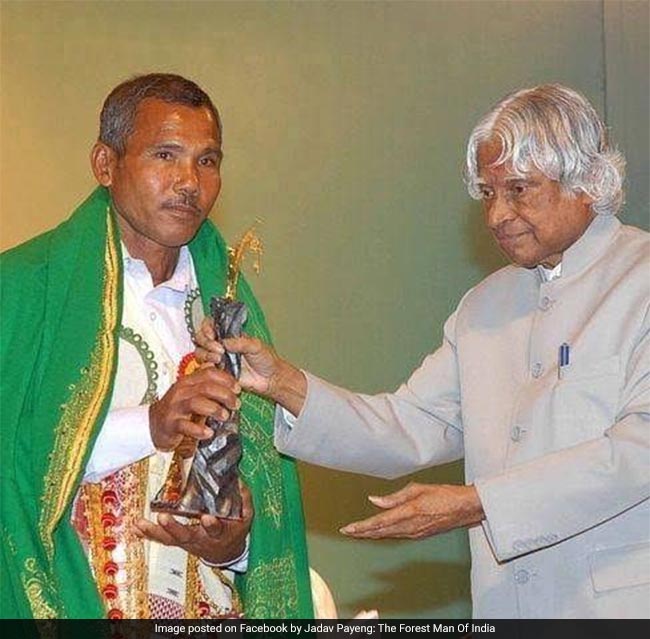
On Earth Day 2012, Jawaharlal Nehru University named him the “Forest Man of India”. Then in 2015, the Government of India awarded him the Padma Shri, one of the country’s highest civilian honors.
Today, Payeng speaks to young people whenever invited by schools and colleges. In his own humble way, he insists that lasting change must begin with the next generation. “You can’t teach an old myna to talk,” he says, urging both government and civil society to shape policy around children.
Lessons from the Forest Man
Jadav lives inside his forest with his wife and three children. He earns his living by selling milk from his cattle. Yet, in nurturing the forest, he has sacrificed about 100 cows and buffalo to tigers. This shows the depth of his commitment and the personal cost of his mission.
His forest does much more than look green. It helps fight flooding, controls erosion on Majuli Island, and brings wildlife back. It also demonstrates that one person’s care can heal the environment and benefit communities.
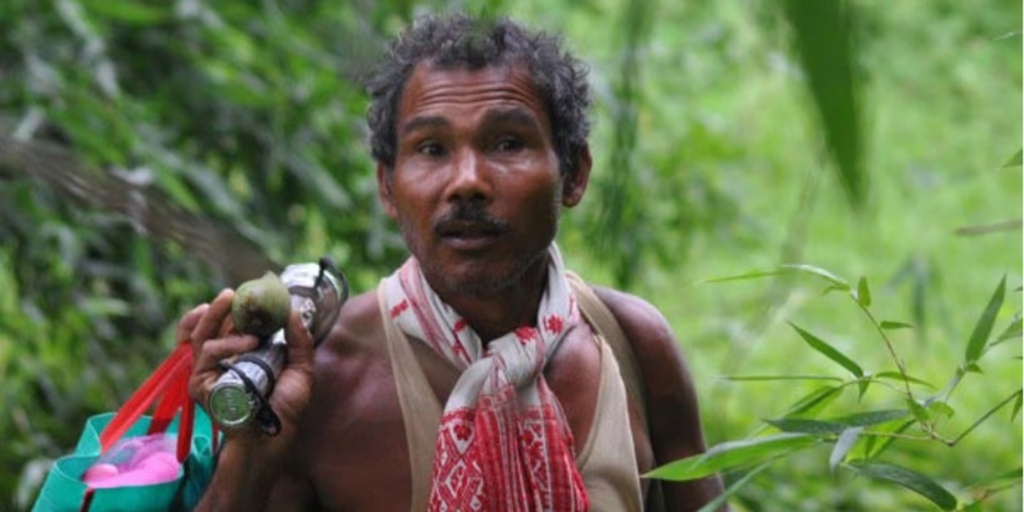
From an unassuming sandbar to international recognition, Jadav Payeng’s journey is both unbelievable and inevitable. What began with a boy mourning dead snakes on a barren riverbank has grown into a forest that shelters giants. And still, every dawn, he plants.
Also read | Visakhapatnam Launches District Entrepreneurship Mission to Boost Startups