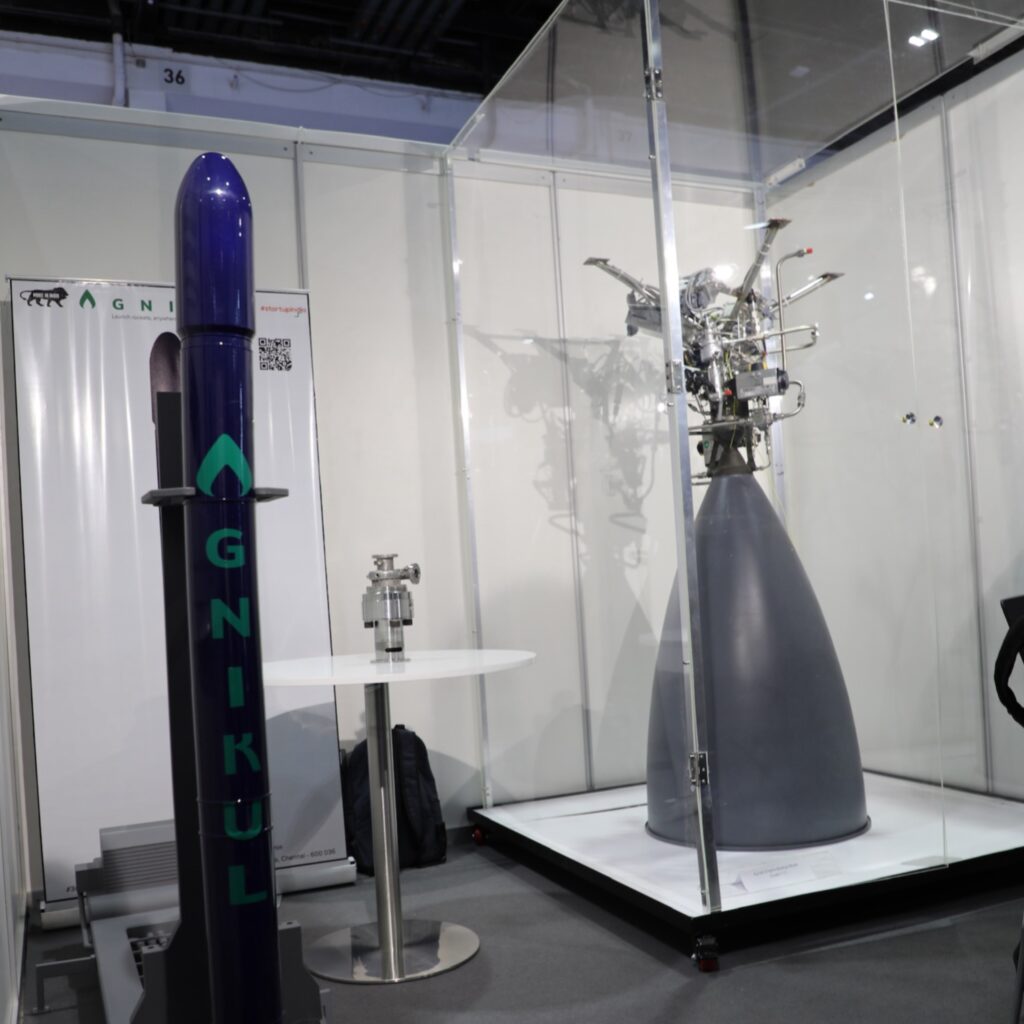
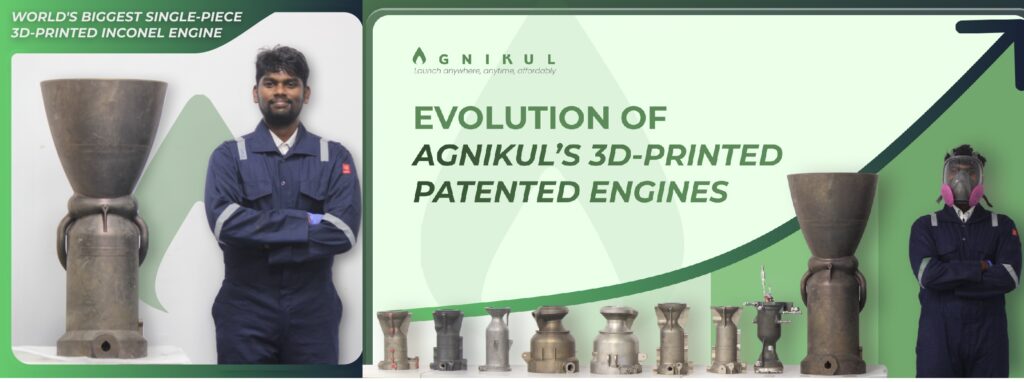
A Chennai startup, Agnikul Cosmos, has made a historic engineering achievement: a about 1-meter-long, single-piece rocket engine 3D-printed in Inconel, and the firm says the design and production process have been patented in the United States — a first for Indian private space technology.
Why it matters: less parts, less risk, quicker builds
The conventional rocket engine is a complicated build-up of welded and bolted components. Agnikul’s monoblock strategy — printing the engine in a single piece without welds, joints, or fasteners from fuel ingestion to plume exit — minimizes mechanical failure sites, streamlines supply chains, and decreases prototyping and production lead times. The firm presents it as a step-change in manufacturing dependability and scalability for small-sat launch vehicles.
The tech in a nutshell
The engine is made from Inconel, a series of nickel-chromium superalloys valued for strength and heat resistance in high-temperature aerospace use. Creating an integrated combustion chamber, injector, igniter, and nozzle with internal cooling passages in one printed part demands sophisticated additive‑manufacturing hardware and process control — and that’s what Agnikul claims the patent is designed to safeguard: the design and the way to print such a high‑complexity part in volume.
Numbers and context
Agnikul’s revelation puts the engine at roughly one metre in length — the largest single-piece Inconel rocket engine publicly announced to date. Indian media also draw attention to radical time savings: where months are taken in traditional engine production, Agnikul and industry analysts point out that additive processes have brought build time on previous projects to days instead of months, allowing faster iteration cycles for startups.
Strategic and industry significance
Securing a U.S. patent gives Agnikul certification and IP protection in a foreign market, a place where supply chain and manufacturing innovations are strategic assets. In India’s growing private space ecosystem, the achievement indicates local technical capabilities in advanced materials and additive manufacturing — domains that are becoming more critical to low-cost, responsive launch solutions for small satellites. Agnikul’s operations in those facilities linked to academic and research institutions (including IIT Madras research infrastructure interfaces) highlight startup and Indian research institution collaboration.
Agnikul Cosmos’ single-piece Inconel engine and U.S. patent are an important technological and strategic leap for India’s private space industry. It is one that reduces build cycles, lessens assembly risk, and makes an IP mark in a competitive world market.
What’s next
A patent is a significant legal achievement, but operational validation — hot‑fire testing, flight qualification, and integration into launch vehicles — will be the true proving ground. If the single-piece engine proves reliable under test and flight conditions, it has the potential to hasten Agnikul’s roadmap for commercial launches and make the startup a world leader in additive rocket engine force.